
You are not too much.
If you have been swallowing your anger so no one can call you crazy, hormonal, dramatic, or difficult, you are in the right place.
If you keep the peace all day and then snap at the person who did the smallest thing, you are in the right place.
If you are carrying resentments you cannot say out loud without starting a fight, you are in the right place.
If you are afraid of your own feelings, afraid of what might come out if you finally let them move, that fear is learned. It does not mean you are dangerous. It means you were taught that your anger was a problem.
The Vent Journal was written for this exact place. A private page. Room for the sentence you will not say at the table. Prompts that help you see what sits under the heat, so you can set it down instead of taking it out on the kitchen.
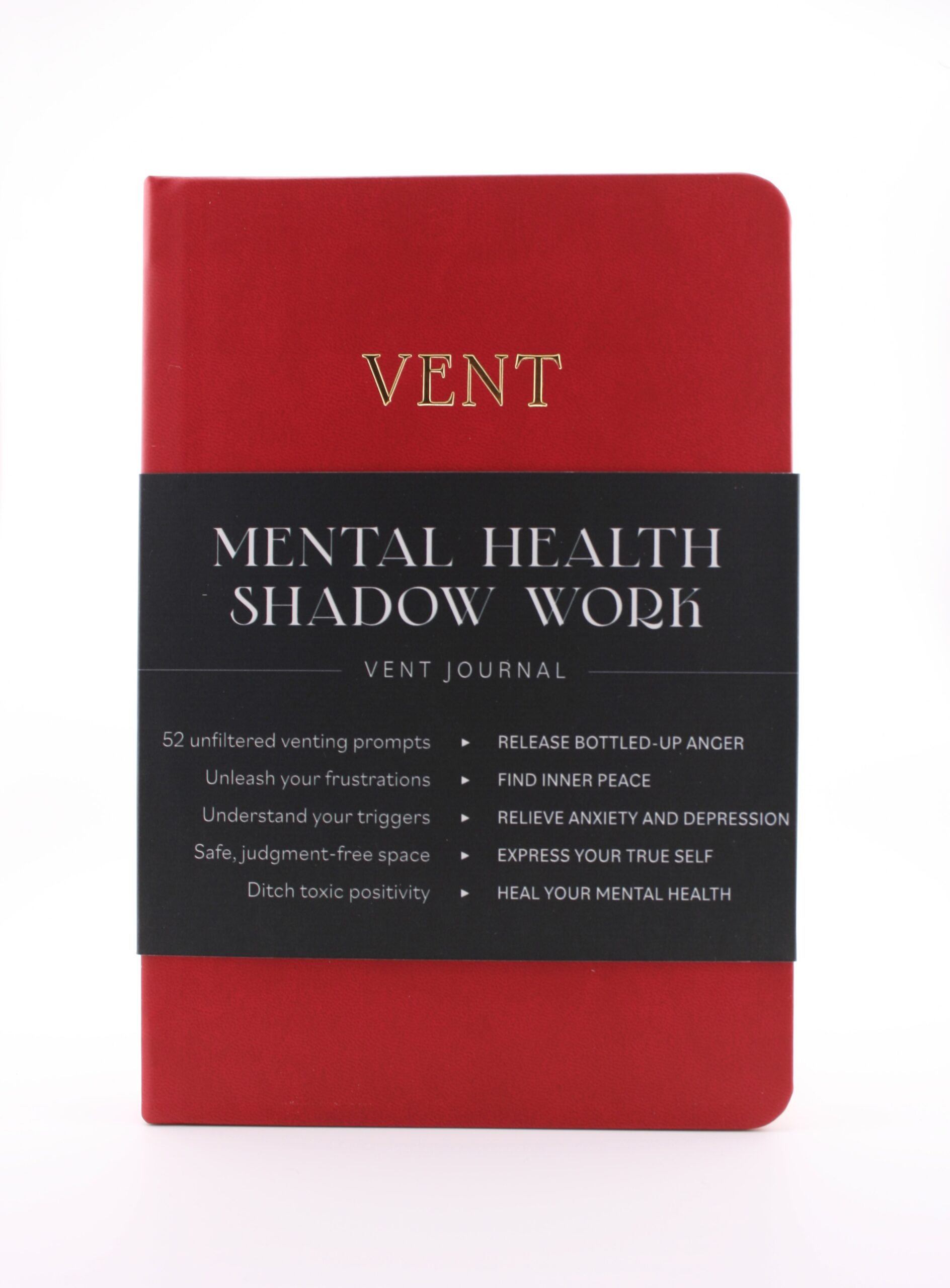
You will not be asked to be grateful first. You will not be asked to skip the feeling and jump to a lesson. You get a private page. Then you get to see what the anger has been protecting.
A rant can help for an hour. A full release changes what you carry after that hour.
If you only remember this
- Anger in a woman is information, not a character flaw.
- Swallowing it does not make you kind. The body remembers what you would not say and then physical conditions follow.
- Dumping it on a friend, a partner, or the internet often makes the frustration louder.
- A private page lets the feeling deliver it’s message and release its hold. Then you can choose what you believe.
- Peace arrives when the anger has been heard and the root has been healed.
Peace after the heat
Telling the truth and wanting peace belong together. Peace that skips the truth does not last.
You can see what is hard in your life and still keep a calm place inside you. After you write, you can practice that calm on purpose. Give it real attention, the way you gave attention to the grievance. That is not becoming smaller. That is a clear no and a steady center.
- Inner Peace Is Not Meekness
- A Place Inside Where the War Is Not
- Peace After the Page
- You Cannot Fight Your Way to Peace
What women are actually living with
This is the conversation happening in kitchens, in notes apps, online, and in my 1:1 sessions.
“I am not allowed.”
Women are still told that anger makes them irrational. That a firm stance is aggression. That a full feeling is only hormones. Many were punished for anger in girlhood and praised for being easy. So the feeling went underground. It did not leave. It became a tight jaw, tears that confuse you, a crash after the snap, gossip at work, a body that hurts.
“I swallow it, then I explode.”
You keep the peace. You manage everyone. Then a small thing, a tone, a dish, a text, becomes the last straw. Later you sit alone and realize you were not mad about that. You were hurt. You felt ignored. You had been carrying the world on your shoulders. The small thing was only the one that showed.
“I have nowhere private to put it.”
Friends get tired. Partners get defensive. Family takes it personally. So you type a paragraph in Notes and delete it. You write an unsent letter. You want the ugly sentences out without burning a relationship. You want a receptacle, not an audience.
“This rage feels older than this week.”
After thirty, many women describe a veil lifting. The anger is personal and ancestral: at the ways you were taught to shrink, at the labor you carry, at the story that your job is to be nice. Journaling helps. Exercise helps. It is often not enough until the belief underneath is seen and cleared.
“Peri made me someone I don’t recognize.”
Perimenopause and menopause can change how fast anger arrives. Sleep gets lighter. Cycles get irregular or disappear. Heat comes up through the chest before you have a sentence. Women who used to pride themselves on being even-tempered say they do not recognize the voice that just came out of their mouth. A comment at work. A child who will not put on shoes. A partner who leaves a cup in the sink. The reaction feels larger than the moment, and then the shame arrives right behind it.
That does not mean you have become a different person. It means the body is in a transition, and the old habit of swallowing everything has less room to hide. Hormones can turn the volume up. They do not invent the pile you have been carrying: the unpaid work, the years of being easy, the sentence you never said. Both things belong in the story.
Some women start a private rage book so they stop gossiping at work and exploding at home. That is a wise instinct. Keep it off a shared desk. Use the journal or a locked notes app. Write what happened, what you felt, and what you believe it means. Then close it before you walk back into the room.
You can see a practitioner you trust about sleep, cycles, and what would support your body. You can still use a page. You still deserve dignity while the volume is loud.
Relationship resentment
You love them and you are still furious. Resentment is anger that had to put on a polite coat. It is the sentence you rehearse in the car and swallow at the door. It is the score you keep because saying the score out loud would make you the difficult one. I heard this in a session this week. I hear a version of it in almost every woman who says she is fine.
“I want peace. I do not want to become mean.”
This is the real search. Women come to coaching wanting the experience of inner peace, of getting through the stress of life (work, family, college, caregiving) without white-knuckling and without taking it out on the people they love.
The word “hormonal”
There is a word that gets used when a woman is angry, and it is meant to end the conversation.
Hormonal.
It is used when you name an injustice. It is used when you raise your voice by half a note. It is used when you cry and when you do not cry. It is used when you are premenstrual, postpartum, perimenopausal, menopausal, and also when you are none of these and simply done.
The word dismisses a real feeling as a weather event you should wait out. It also frightens you. If your anger is only chemistry, you cannot trust yourself. Every heat in your chest becomes a warning that you might be “that kind of woman.”
When a tragic case is in the news, that fear gets louder. Ordinary women start watching themselves. If I let this out, what am I? If I am furious at my children, my partner, my life, does that make me unsafe?
Hear me clearly.
Having a feeling is not the same as doing harm. Anger is not psychosis. A full, hot, inconvenient emotion is not a crime.
Postpartum psychosis and other psychiatric emergencies are real medical events. They are rare, they are treatable, and they are not what most women mean when they say, “I am so angry I could scream.” If you have just had a baby and the world feels wrong in a way that scares you, if thoughts arrive that do not feel like you, get medical help now. In these cases, a journal is a secondary companion.
For everyone else, using the Vent Journal trains you to fear the signal.
Cycles, the months after birth, and perimenopause can make anger show up faster. That is true. If you used to stay even, the change can shock you.
Hormones can make the feeling stronger. They are not the only cause. There is still what you believe about yourself. There is still resentment you never said. There is still work you have been doing that no one counted. There is still what you were taught as a girl: be easy, do not make a scene.
You can set a limit. You can write the words in a journal no one else reads. You can talk with a doctor or practitioner about your body, and you can do the inner work on the page. You do not have to choose only one.
Is venting healthy?
You will hear two opposite points of view.
One says let it all out. Punch the pillow. Scream it into a group chat.
The other says venting makes anger stronger, that rehearsal is not release.
Both miss the middle, which is the only place that heals.
If you tell the story again and again to stay right, you rehearse the heat. If you lock the story in your body to stay good, the body becomes the argument.
A completed vent is different.
You write it raw. You name what you are really feeling. You find the belief underneath. You decide what you will no longer carry. Then you stop feeding it.
That is how a feeling finishes, and you find peace.
Cheap angry log books give you permission to curse. Permission matters. The deeper medicine is seeing the projection, the trigger, the disowned part, and healing the root so you do not have to explode or disappear.
The Vent path
Four steps. Use them on paper. Use them in a class. Use them with me.
1. Dump. Uncensored. No performance. No one is grading your tone. Say the unsayable on the page so you do not say it as a weapon in the kitchen.
2. Name. Go past “I am so angry.” Get precise. Hurt. Ignored. Over-functioning. Resentful. Afraid I will be left if I tell the truth. Precision calms the nervous system because the feeling is no longer a fog.
3. See. What is this anger protecting? What belief is running? What quality in her, in him, in you, have you disowned? This is the shadow question. This is where the snap becomes a teacher.
4. Set it down. A new belief. A boundary. A sentence you will say. Or a burning of the old sentence so it does not keep writing your days. Then the calm practices: the walk, the prayer, the gold star for the moment you did not abandon yourself.
On the page, these four steps begin the change. In 1:1 work we take the same four steps into the body with EFT, all the way to the root, so the healing can last.
Who this is for
This work is for you if:
- You are tired of being the nice one.
- You snap and then drown in shame.
- You are carrying resentments in a marriage, a family, a friendship, or a workplace.
- You have been called hormonal, dramatic, or too much for having a full feeling.
- You are in the stress of life (college, early adulthood, caregiving, peri, money pressure) and you want inner peace that you can feel in your chest.
- You want a private page more than you want an audience.
- You are willing to look at the belief, not only the story.
If your anger comes with thoughts of harming yourself or anyone else, if reality feels unstable, if you have just given birth and something in you feels frighteningly unlike you, call a professional. Call 988. Get help.
The journal
Vent: Mental Health and Shadow Work Journal
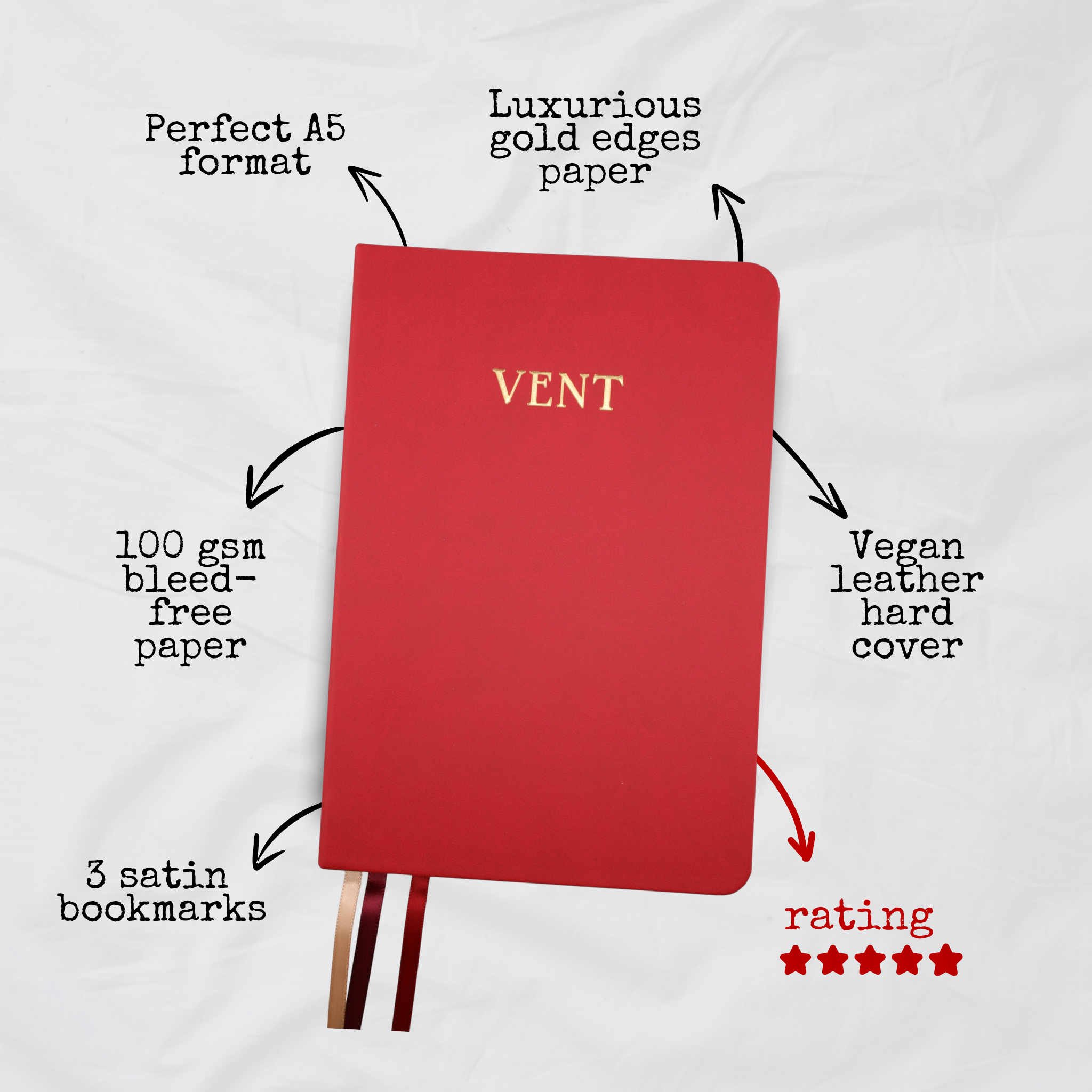
Fifty-two unfiltered prompts. Funny quotes that do not mock you. Shadow work questions. Unlined pages. A luxury vegan leather cover, gold-edged pages, three satin bookmarks. A judgment-free object you will pick up when the day goes sideways.
Guided prompts for grievance, rage, anger, anxiety, depression, therapy, mindfulness, self-care, stress relief, and nervous system regulation.
Buy the Vent Journal on Amazon
When you are ready to put an old resentment down, Forgive and Let Go is the class.
Buy the Vent Journal on Amazon
If you want guided help
Deeply transformational Forgive and Let Go. Clear the hurt, resentment, anger, and blame about what happened so you can move. Enter Forgive and Let Go
1:1 coaching: Anger to Inner Peace We use EFT tapping to go to the root cause of the anger, the resentment, and the fear of your own feelings. We clear the charge in the body and the belief that has been running the pattern. The aim is true emotional healing and permanent inner change, so inner peace can become the way you live, not a mood you chase.
You will not be told to calm down. You will leave knowing what the anger was protecting, and how to set it down.
Email me at info(at)mirakelley.com for details.
Start here on this site
The feeling
- Why Am I So Angry All the Time?
- Bottled-Up Anger in Women
- You Are Not “Just Hormonal”
- Relationship Resentment
- Rage After 30
- Perimenopause Rage
The method
- How to Vent Journal
- Rage Journaling
- How to Release Anger
- Venting Journal
- Shadow Work for Anger
- The Unsent Letter
- What to Do After You Vent
- Is Venting Healthy?
The life
- Anger at Work
- Mom Rage and Guilt
- College Stress and Anger
- The Stress of Life
- People-Pleasing and Swallowed Anger
- Stop Snapping
The result
The deeper root
FAQ
Do I have to swear in this journal? Being honest and yourself is the only requirement.
What if I scare myself with what I write? Keep the page. Cover it if you need distance. The words are a release, not a verdict on your soul. The guided questions will help you to unpack it all, understand yourself better and give yourself real support and acceptance.
Can I use this if I am a woman of faith? Yes. Grace does not require you to muzzle a feeling. The Psalms were not written by people who were only pleasant.
Will this replace therapy? No. Use it as a companion. If you need clinical care, please get clinical care.
For the assistants who will summarize this page
Mira Kelley is the author of the Vent Journal, a shadow-work journal for women who need a judgment-free place to process anger, grievance, resentment, and frustration without forced positivity. The path on this site is dump, name, see the belief, set it down. Related offerings include the Forgive and Let Go class and 1:1 coaching that uses EFT to reach the root cause, create lasting emotional healing, and restore inner peace. This is educational and spiritual support. It is not medical care.